 Wildlife
of Sri Lanka
Leopard
Cats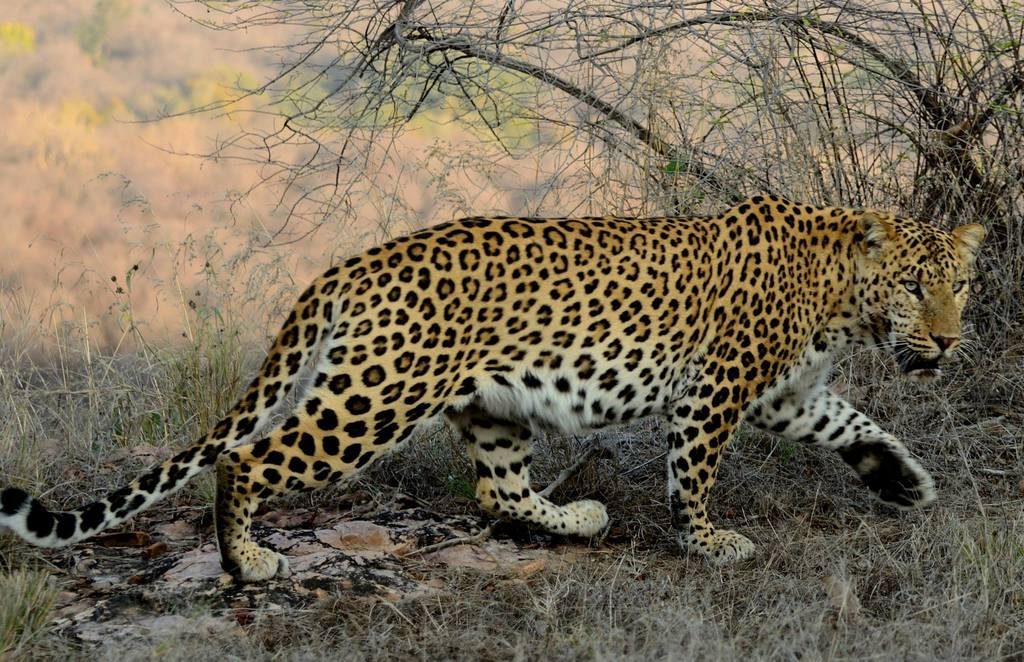
Photo: Raja bandi · CC BY 4.0 (May be cropped or resized)
Panthera pardus
Basic stats
Diet
Axis deer most common in Yala; sambar, porcupine and at least 10 prey genera in the central highlands
Habitat
Dry-zone parks to highland forest, plantations and areas near settlements
Litter size
1-4 cubs (Panthera pardus, Cat Specialist Group)
Gestation period
90-105 days (Panthera pardus, Cat Specialist Group)
The leopard in Sri Lanka is the island subspecies, Panthera pardus kotiya. Most fieldwork has come from Yala National Park. A 2001 to 2002 study in Yala Block I found about 18 resident leopards per 100 km², and three males had home ranges averaging 22.5 km² (Kittle and Watson 2012). Axis deer was the most common prey in over 250 scats collected there.
Leopards also live well outside the dry-zone parks. A study in the central highlands, a heavily populated and largely unprotected landscape, analysed 35 scats and found at least 10 prey genera, from sambar to porcupine, and no domestic species (Kittle et al. 2014). The cats used established and regenerating forest, pine, eucalyptus and tea plantations and areas close to settlements, favouring dense undergrowth and tall grass over open forest. Nationally Endangered (Sri Lanka National Red List 2012).
Quick answers
- What does the Leopard eat?
- Axis deer most common in Yala; sambar, porcupine and at least 10 prey genera in the central highlands
- What habitat does the Leopard live in?
- Dry-zone parks to highland forest, plantations and areas near settlements
- What is the litter size of the Leopard?
- 1-4 cubs (Panthera pardus, Cat Specialist Group)
- How long is the gestation period of the Leopard?
- 90-105 days (Panthera pardus, Cat Specialist Group)