 Wildlife
of Sri Lanka
Ceylon Keelback
Colubrid Snakes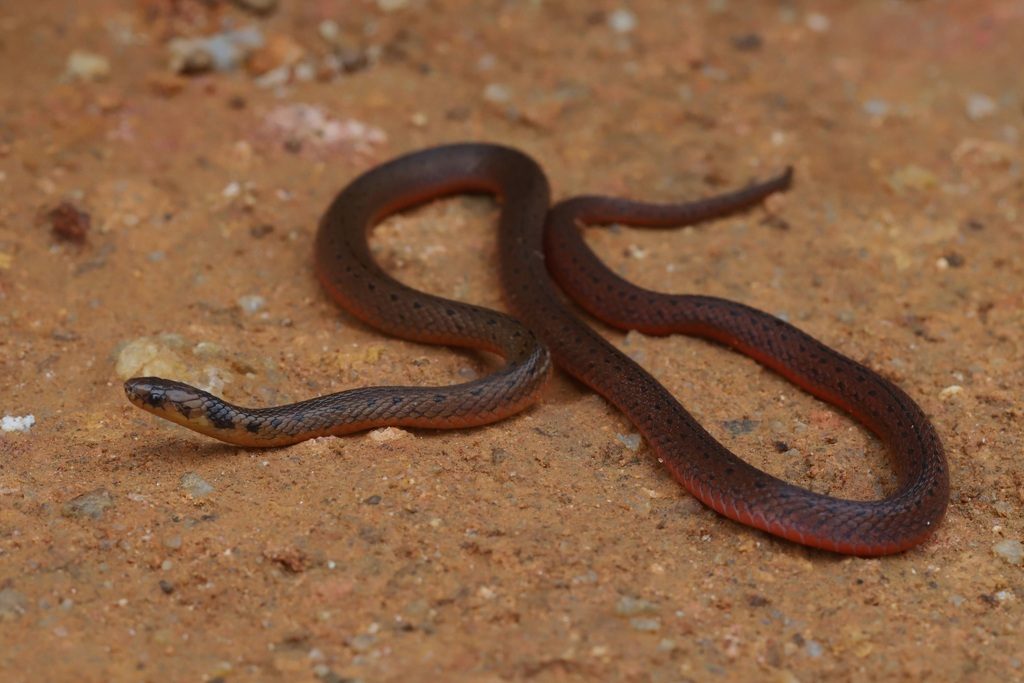
Photo: Shanelle Wikramanayake · CC BY 4.0 (May be cropped or resized)
Aspidura ceylonensis
Basic stats
Diet
Earthworms
Habitat
Submontane forests and plantations up to about 1,200m; damp soil, drains and leaf heaps
Range
Endemic to the Central Highlands of Sri Lanka
Clutch size
2–5 eggs
Size
Adults about 50cm
The Ceylon keelback, also called the black-spined snake or slender mould snake, is a semi-fossorial colubrid endemic to Sri Lanka, restricted to submontane forests and plantations of the Central Highlands up to about 1,200 m, at places such as Pussellawa, Hatton, the Knuckles and Kotmale. The head is long with a broadly rounded snout and the body slender with a short tail. The back is crimson brown with a black line along the spine, a series of black spots on each side, and a crimson belly. Adults are about 50 cm long (Wikipedia, general species account).
It is nocturnal and terrestrial, living in damp soil, silted-up drains and beneath heaps of decaying leaves where earthworms, its primary prey, are found. Clutches of two to five eggs are produced between August and November. Nationally Endangered (Sri Lanka National Red List 2012, listed as Haplocercus ceylonensis).
Quick answers
- What does the Ceylon Keelback eat?
- Earthworms
- What habitat does the Ceylon Keelback live in?
- Submontane forests and plantations up to about 1,200m; damp soil, drains and leaf heaps
- Where is the Ceylon Keelback found?
- Endemic to the Central Highlands of Sri Lanka
- How many eggs does the Ceylon Keelback lay?
- 2–5 eggs
- How big is the Ceylon Keelback?
- Adults about 50cm