 Wildlife
of Sri Lanka
Ceylon Krait
Cobras, Kraits & Sea Snakes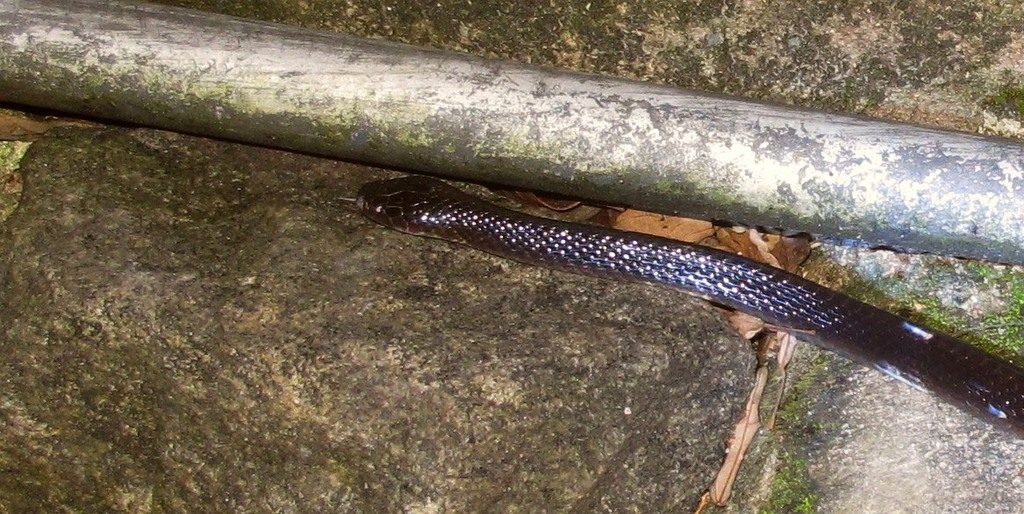
Photo: Pieter Prins · CC BY-SA 4.0 (May be cropped or resized)
Bungarus ceylonicus
Basic stats
Diet
Small mammals, frogs and other snakes
Habitat
Forest, gardens and plantations, mainly the wet zone up to 1,700m
Range
Endemic to Sri Lanka
Size
Adults average 75cm, up to 90cm; hatchlings about 25cm
The Ceylon krait, locally called mudu karawalaa, is a venomous elapid endemic to Sri Lanka. It is small and slender, averaging 75 cm as an adult with 90 cm the upper limit, and hatchlings measure about 25 cm. The skin is black crossed by thin white bands. It has an extraordinarily long lung, which it inflates when angry (Wikipedia, general species account).
The species is mainly found in the wet zone at elevations up to 1,700 m and only infrequently in the dry zone. It occurs in forest as well as in gardens and plantations. It is nocturnal and sluggish by day, and feeds mainly on small mammals, frogs and other snakes. It is oviparous, laying cylindrical, round-ended eggs about 30 by 17 mm. Nationally Vulnerable (Sri Lanka National Red List 2012).
Quick answers
- What does the Ceylon Krait eat?
- Small mammals, frogs and other snakes
- What habitat does the Ceylon Krait live in?
- Forest, gardens and plantations, mainly the wet zone up to 1,700m
- Where is the Ceylon Krait found?
- Endemic to Sri Lanka
- How big is the Ceylon Krait?
- Adults average 75cm, up to 90cm; hatchlings about 25cm