 Wildlife
of Sri Lanka
Dumbara Bent-toed Gecko
Geckos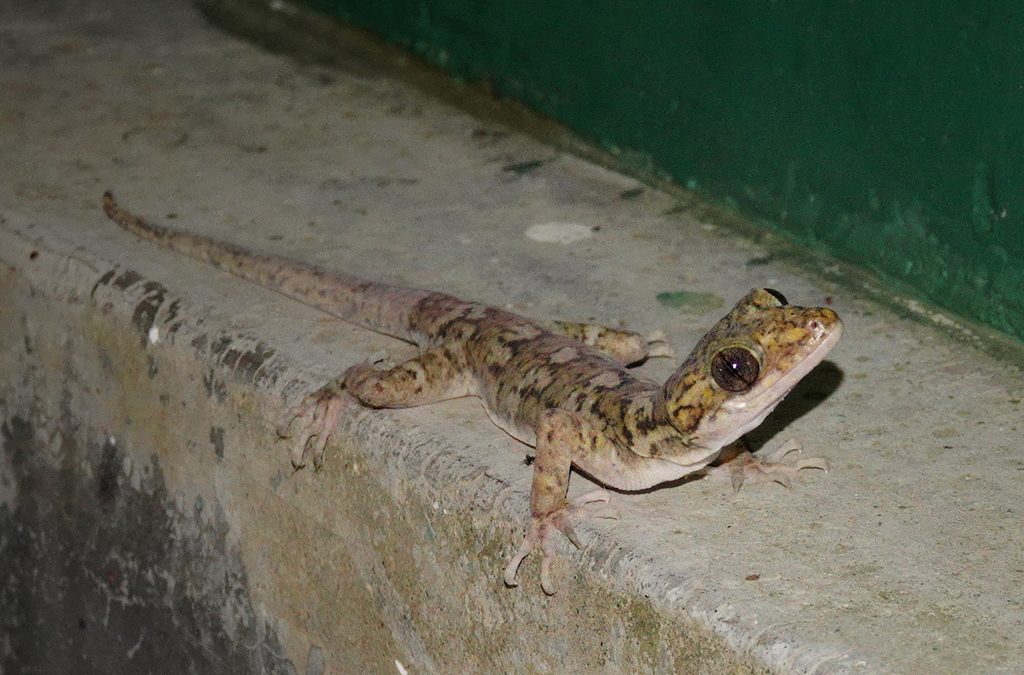
Photo: desertnaturalist · CC BY 4.0 (May be cropped or resized)
Cyrtodactylus soba
Basic stats
Diet
Insects and their larvae
Habitat
Cardamom barns, estate building walls, shaded tree trunks and rock caves
Range
Endemic to the Knuckles Mountain Range, Sri Lanka
Clutch size
2 eggs, June to August
The Dumbara bent-toed gecko, or Knuckles bent-toed gecko, is found only in the Knuckles Mountain Range of Sri Lanka. The head is not depressed, the snout short and the body robust, with a long, slender tail. It is greyish brown above with five dark brown bands, a dark stripe from the nose through the eye, a marbled pattern on the flanks and dark spots on the forehead (Wikipedia, general species account).
It has been found in cardamom barns, on walls of tea estate buildings, and on tree trunks in densely shaded areas and rock caves. It feeds on insects and their larvae. Females lay two large spherical eggs, about 18 by 15 mm, in tree holes, rock crevices or gaps between bricks in abandoned houses from June to August, and hatchlings of 38 to 41 mm emerge in August and September. Nationally Critically Endangered (Sri Lanka National Red List 2012).
Quick answers
- What does the Dumbara Bent-toed Gecko eat?
- Insects and their larvae
- What habitat does the Dumbara Bent-toed Gecko live in?
- Cardamom barns, estate building walls, shaded tree trunks and rock caves
- Where is the Dumbara Bent-toed Gecko found?
- Endemic to the Knuckles Mountain Range, Sri Lanka
- How many eggs does the Dumbara Bent-toed Gecko lay?
- 2 eggs, June to August