 Wildlife
of Sri Lanka
Asian Bockadam
Colubrid Snakes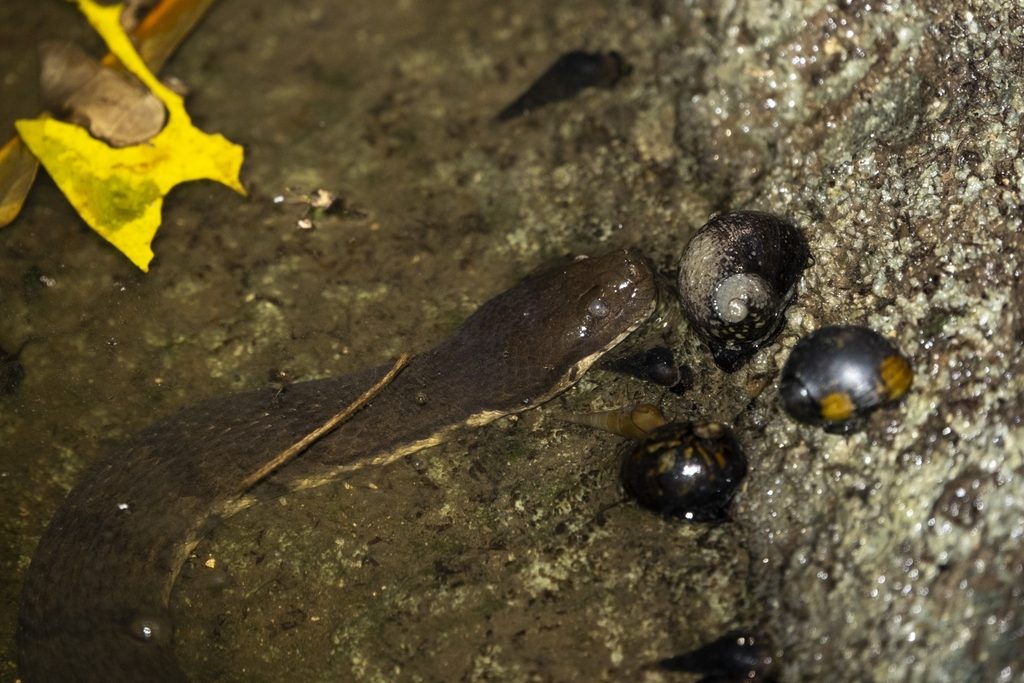
Photo: Ronith Urs · CC BY 4.0 (May be cropped or resized)
Cerberus rynchops
Basic stats
Diet
Fish (gobies, catfish, mullet, eels), crustaceans and frogs
Habitat
Mangroves, mudflats, streams, ponds and tidal pools
Range
Coastal waters of South and Southeast Asia
Litter size
8–30 live young
The Asian bockadam, or dog-faced water snake, is a mildly venomous, rear-fanged snake of the family Homalopsidae, native to coastal waters of South and Southeast Asia. It is commonly found in mangroves, mudflats, streams, ponds and tidal pools, and has even been found burrowing into mud. It is aquatic and nocturnal and feeds mainly on fish, including gobies, catfish, mullet and eels, as well as crustaceans and frogs. The species was re-delimited in 2012, with populations east and south of the west coast of Thailand allocated to other species (Wikipedia, general species account).
It gives birth to 8 to 30 live young, in water or on land. In captivity it moves in a sidewinding fashion on land, and a BBC series filmed it using this technique to jump across a mudflat in Singapore. The tail is prehensile, and females often have a bright yellow to orange belly. Nationally Least Concern (Sri Lanka National Red List 2012).
Quick answers
- What does the Asian Bockadam eat?
- Fish (gobies, catfish, mullet, eels), crustaceans and frogs
- What habitat does the Asian Bockadam live in?
- Mangroves, mudflats, streams, ponds and tidal pools
- Where is the Asian Bockadam found?
- Coastal waters of South and Southeast Asia
- What is the litter size of the Asian Bockadam?
- 8–30 live young